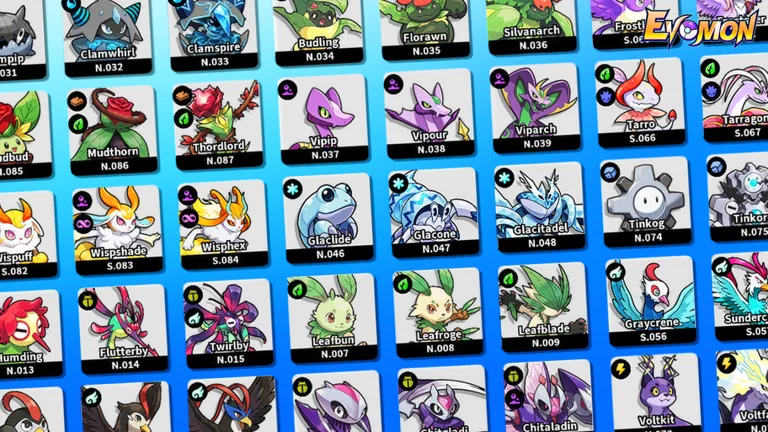
What should a new player do first in Evomon?
The safest answer in this Evomon beginner guide is to follow a short loop instead of rushing toward a rare catch. Open the official Roblox experience, check the current description and update context, review the Evomon codes page, then choose a starter that gives your first team room to add a different type. Catch one or two useful partners before spending every upgrade item on the first creature you receive.
Your first session should finish with a readable team plan: one dependable lead, at least one type that covers a different matchup, enough basic resources for the next route, and a note about what the Dex or in-game evolve screen still needs to confirm. The game can change, so this guide explains decisions that remain useful even when exact rewards, spawns, or balance values move.
This is a route guide, not an official rules database. Treat code strings, creature locations, evolution conditions, and tier-list claims as current-game checks. If the live game disagrees with an older guide, trust the in-game screen and the official Roblox experience first.
Do not spend rare resources until you know what your starter does, which type your next route pressures, and whether a new catch fills a real team gap. Early flexibility is more valuable than a rushed perfect build.
Evomon beginner guide: your first 10 minutes
A new player usually loses more time to uncertain priorities than to a difficult battle. Use the following order as a lightweight checklist. It keeps the first session moving while leaving room for your preferred Evomon and for changes in the live Roblox experience.
The route is deliberately conservative: verify before farming, compare before investing, and use the type chart as a prompt to test your team rather than as a reason to copy an unverified ranking.
- 1
Open the official experience
Start from the official Roblox Evomon page and check that the title, creator context, description, and current update signals match the game you meant to play. Evomon.blog is a guide, not a download or playable mirror.
- 2
Check codes and rewards
Look at the Evomon codes guide before a long grind. Enter a code exactly as shown in the game and record whether it works. A reported code is a lead until in-game redemption or a current official source confirms it.
- 3
Choose for flexibility
Pick the starter whose role you understand and whose type does not force the whole party into one lane. If you prefer another starter, keep it; the important choice is to plan the next coverage slot.
- 4
Catch one coverage partner
Explore the next safe route long enough to see what types appear and catch a partner that handles a different pressure. Compare role, type, evolution clues, and resource cost before replacing your lead.
- 5
Test, then invest
Use a few ordinary fights to learn damage, speed, survivability, and resource needs. Save premium items until the team passes a route check and you know which Evomon will stay useful.
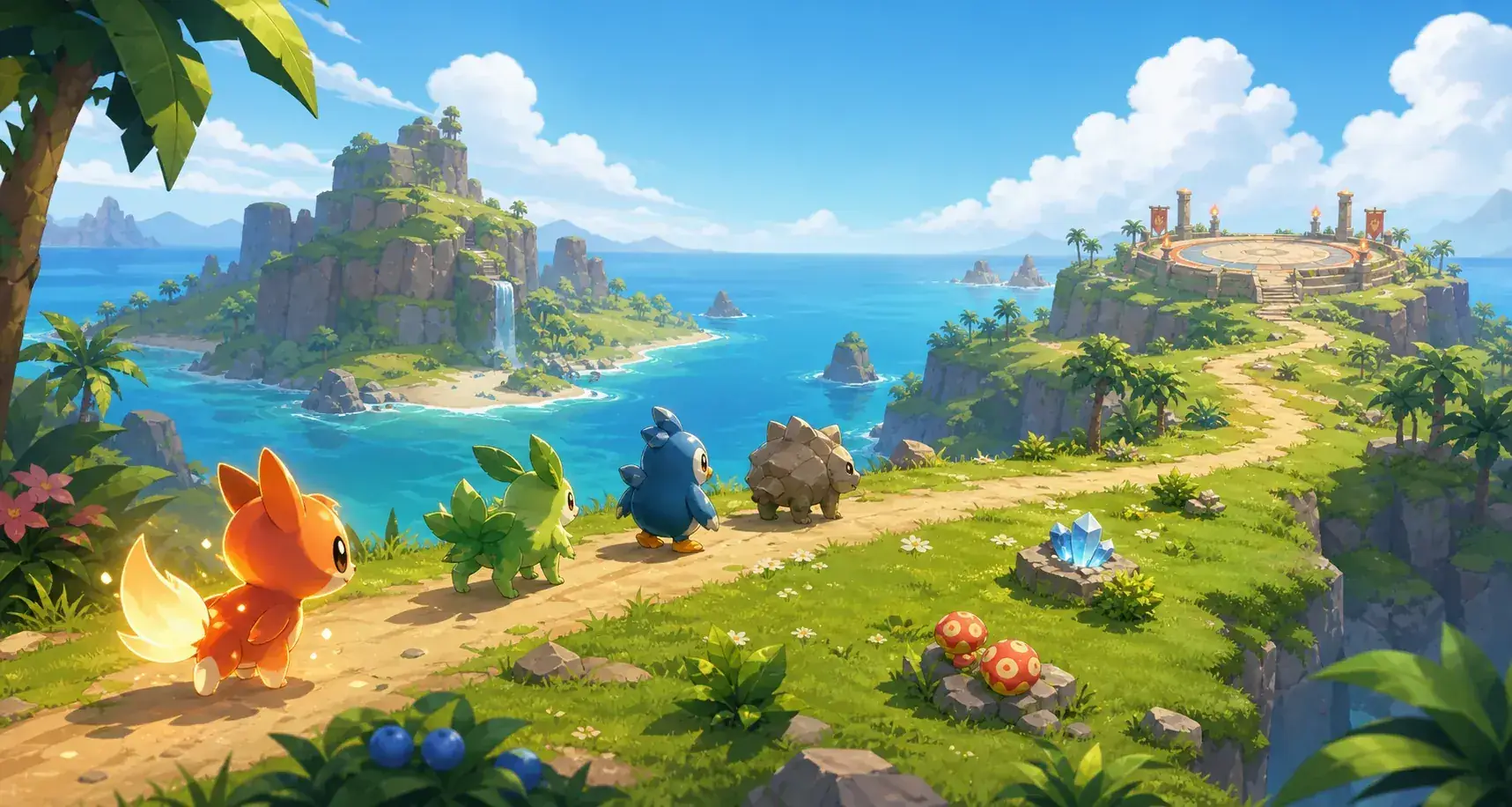
How to choose an Evomon starter
The best starter for a new player is usually the one that is easy to understand, useful on the opening route, and easy to support with a second type. A tier list can give context, but it cannot see your favorite playstyle, available codes, route, or future catches.
Bubble: safe learning route
Bubble is a sensible default when you want a forgiving opening and time to learn the basic loop. Use it as a stable lead while you inspect the next route instead of assuming the starter must carry every fight forever.
- Good for learning swaps and resource timing
- Leaves room for a different coverage partner
- Verify its current evolution and move details in game
Blazpup: pressure-first route
Blazpup suits a player who enjoys faster pressure and is willing to make earlier matchup checks. The aggressive option still needs a backup plan when the route resists its main damage pattern.
- Test survivability before using premium items
- Pair with a type that covers its weak matchups
- Do not confuse popularity with universal best choice
Leafbun: route-specific value
Leafbun can make sense when your route or team goal benefits from its type and role. Treat it as a valid choice, then use the Dex and type chart to decide which partner prevents a narrow team.
- Choose it for a clear team role
- Check whether the next area rewards its coverage
- Keep enough currency and catches for a second option
Build type coverage before chasing a tier list
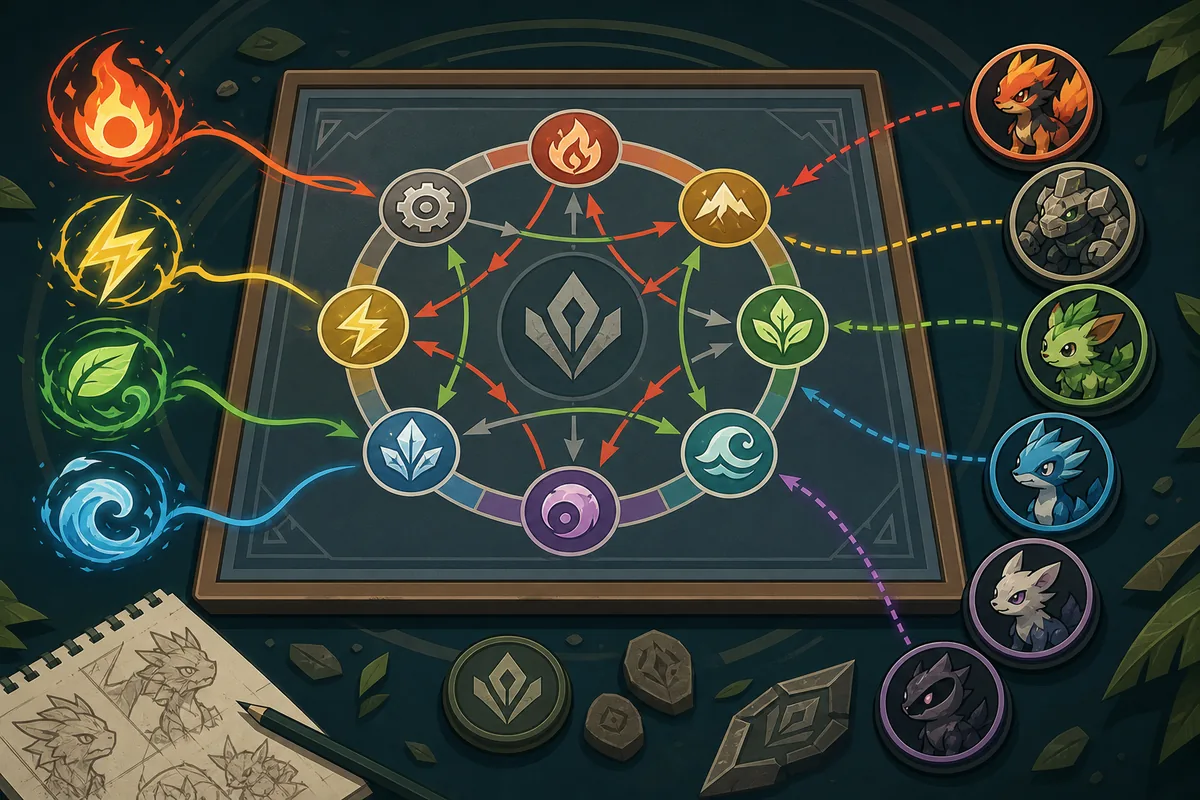
A beginner team does not need every type. It needs enough variety to avoid losing because one matchup makes the whole party ineffective. Check the type chart after each new catch and write down what your current team cannot answer.
| Team need | What to do | Avoid |
|---|---|---|
| Reliable lead | Keep the starter at a level where it can safely scout the next route. | Using every boost before testing a new area. |
| Different type | Catch one partner that covers a pressure your starter cannot handle. | Building a team from favorite names with identical coverage. |
| Flexible reserve | Keep a spare catch until its role, evolution path, and upkeep are clear. | Releasing a useful answer just to make the party look tidy. |
| Battle information | Record which attacks, swaps, and items helped during route fights. | Treating a community tier list as a substitute for testing. |
Exact type strengths, weaknesses, and encounter tables can be patch-sensitive. Use this table as a planning framework and confirm live values in the Roblox game.
Train, evolve, and spend resources in the right order
Training should answer a nearby problem. If the next route defeats your starter, add coverage or improve the current role; do not grind blindly just because a guide lists a higher level. After a few fights, compare how much experience, currency, food, balls, and evolution material the route actually consumes.
Evolution is a checkpoint, not a race. Open the in-game evolve screen when available and record the displayed condition. Community posts can reveal a useful lead, but they may describe an older patch or a different creature. Keep a small reserve of rare materials until the evolution is confirmed and the result fits your team.
1. Test the role
Use ordinary battles to learn whether the Evomon is a lead, damage option, defensive switch, speed tool, or temporary placeholder. A clear role makes later investment easier to judge.
2. Secure the next route
Spend common resources to pass the next area, but keep rare items in reserve. The next catch or code reward may change your best long-term choice.
3. Confirm evolution
Check the live evolve screen, requirement text, and resulting role before farming a special material. Update your notes when the game changes instead of repeating an old requirement.
Prepare for the first island battle
Before a first boss-style or island battle, stop treating the party as a list of creatures and treat it as a sequence of answers. You do not need a perfect tier list team; you need a lead, a switch, a way to recover from a bad matchup, and enough supplies to finish the attempt.
- Read the opponent or route signalUse the current in-game description, battle preview, or recent scouting fight to identify the pressure you are likely to face. Do not assume an old island order is unchanged.
- Lead with informationStart with the Evomon that can safely reveal the matchup. A lead that survives one test is often more valuable than a fragile high-damage opener.
- Keep a planned swapChoose the partner that answers the lead's bad matchup before the battle begins. Practice the swap in a normal fight so the plan is not only theoretical.
- Bring ordinary suppliesCarry the recovery or capture supplies the current game actually allows, but do not burn rare items on a low-risk test. Recheck the menu after updates.
- Review the lossIf you fail, write down the exact problem: type pressure, speed, missing recovery, low level, or a wrong investment. Fix that one bottleneck before rebuilding the whole team.
Common Evomon beginner mistakes
Starting with an unofficial mirror
Search results can mix guides, copies, and unsafe download claims. Use the official Roblox experience for play access and use this site for planning and verification notes.
Redeeming an unverified code repeatedly
A code list can lag behind the live game. Try the string once as shown, record the result, and move on when the game reports invalid or expired instead of trusting a promise.
Spending every rare item on the starter
The first Evomon is a teacher and a team member, not automatically your final carry. Keep rare materials until a route test and an evolve-screen check support the investment.
Copying a tier list without checking the route
Availability, type coverage, evolution cost, and patch timing matter more than a letter grade. Ask what the recommended Evomon solves for your current party.
Evomon beginner guide FAQ
What is the best way to start Evomon?
Open the official Roblox experience, check current codes, choose a starter you understand, catch one different type, and test the party before spending rare resources. This route keeps your first session flexible.
Which Evomon starter should a beginner choose?
There is no permanent universal winner. Bubble is a safe learning default, Blazpup suits pressure-first play, and Leafbun can fit a route-specific plan. Compare the current type, evolution, and resource information in game.
Should I use Evomon codes immediately?
Check the current Evomon codes guide before grinding, then redeem a code exactly as the game displays it. Treat third-party reports as leads until the game accepts the string or an official source confirms it.
How many Evomon should I catch in the first session?
Catch enough to cover a real team gap and to compare the next route. One starter plus one or two useful alternatives is usually more informative than filling every slot before you understand roles and upkeep.
Should I follow an Evomon tier list?
Use a tier list as context, not as an instruction. A high-ranked Evomon may duplicate your coverage, be unavailable on your route, or need resources you should save. Ask what problem it solves for your team.
How do I know when to evolve an Evomon?
Check the current in-game evolve screen and confirm the requirement and result. Save rare materials until the condition is clear and the evolved role still supports your team plan.
Is this an official Evomon guide?
No. Evomon.blog is an independent fan-made guide. Use the official Roblox experience for the live game, developer notices, platform information, and any current details that conflict with an older guide.
Sources and verification notes
- Official Roblox Evomon experience - Use for the live game, creator context, description, servers, and update signals.
- Public Evomon community reference - Used only for gap research and topic comparison; community information is not treated as official game data.
- Evomon.blog source policy - Explains the independent fan-site scope and verification approach.