Evomon evolutions guide
Evomon Evolutions Guide: Starter Paths, Stones & Evolve Checks
Learn how to read an evolution route without treating an old video or community list as a permanent rule. This guide separates the repeatable checks from values that may change in the live Roblox experience.
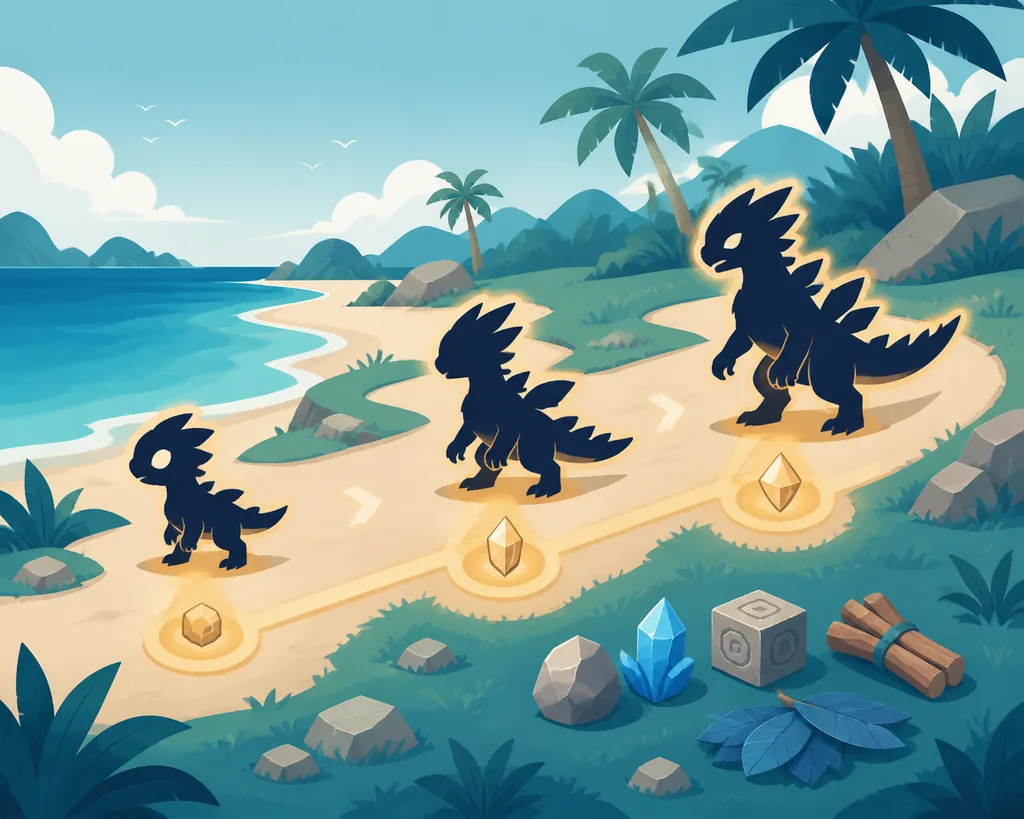
How do Evomon evolutions work?
The safest way to understand Evomon evolutions is to treat the live evolve screen as the final authority. A creature may follow a level route, a material or evolution-stone route, or a starter path that changes how you think about the next form. The exact level, item count, target name, and reward details can change after a Roblox update, so a guide should teach you what to check rather than promise one permanent table.
Start with the creature you actually own. Open its current details, look for the evolve option, and record the requirement before spending anything. Then compare that requirement with the next route, your available stones, and the role the evolved form would fill. An evolution is useful when it solves a real team problem; it is not automatically correct just because the next form looks rarer.
For starter evolutions, use the starter guide for the comparison between Bubble, Blazpup, and Leafbun, then return here for the general process. For farming questions, use the Evolution Stones guide. This page stays focused on the bridge between those topics: how to verify an evolution and make a resource decision without copying an unverified list.
Check the current evolve screen, confirm the level and materials, then test the new form in a low-cost battle before committing rare resources.
What is actually verified about Evomon evolutions?
Public Evomon discussions often mix official game screens, community observations, old videos, and guesses. Use this boundary to decide which parts of an evolution guide are stable enough to follow and which parts need an in-game check.
| Topic | Useful answer | Caution |
|---|---|---|
| Evolution route | A creature can have a visible progression or an evolution option in its details screen. | Do not assume every creature uses the same level or item rule. |
| Starter path | Starter choices can lead to different role and evolution decisions, so compare the route before investing. | Starter names, forms, and requirements should be checked in the current game. |
| Evolution stones | Stones and other materials may gate a form or make an evolution more expensive. | The farming route and reward source can change with a patch or event. |
| Evolved role | The best reason to evolve is usually a clearer battle role, coverage option, or survivability improvement. | A rarer-looking form is not proof that it fits your team. |
| Community list | Community lists are useful for finding what to investigate next. | Treat them as leads until the live evolve screen confirms the value. |
This guide uses a verification-first boundary. It does not publish invented drop rates, fixed evolution levels, or permanent rewards when the current official game screen cannot confirm them.
Three Evomon evolution routes to check
The route label helps you ask the right question. It does not replace the evolve screen, because one update can add a new form, change a cost, or move a requirement.
| Route type | Look for | Best use | Main risk |
|---|---|---|---|
| Level or progression | A level gate, story milestone, island unlock, or visible progress bar. | Plan when to train and whether the next form is needed for the route ahead. | A reported level from an old video may no longer match the live game. |
| Stone or material | Named stones, crystals, tokens, equipment-like materials, or a quantity requirement. | Compare farming time, opportunity cost, and the role the form will fill. | Rare materials may be useful for another creature or a later form. |
| Starter or branch path | A starter choice, branch, target form, or role trade-off shown in the route. | Choose a direction that fits your type coverage and next battle instead of chasing a universal winner. | A starter comparison can be mistaken for a complete all-creature evolution list. |
If the screen does not show a requirement, write down what is visible and mark the rest as unverified. A careful unknown is more useful than a precise-looking guess.
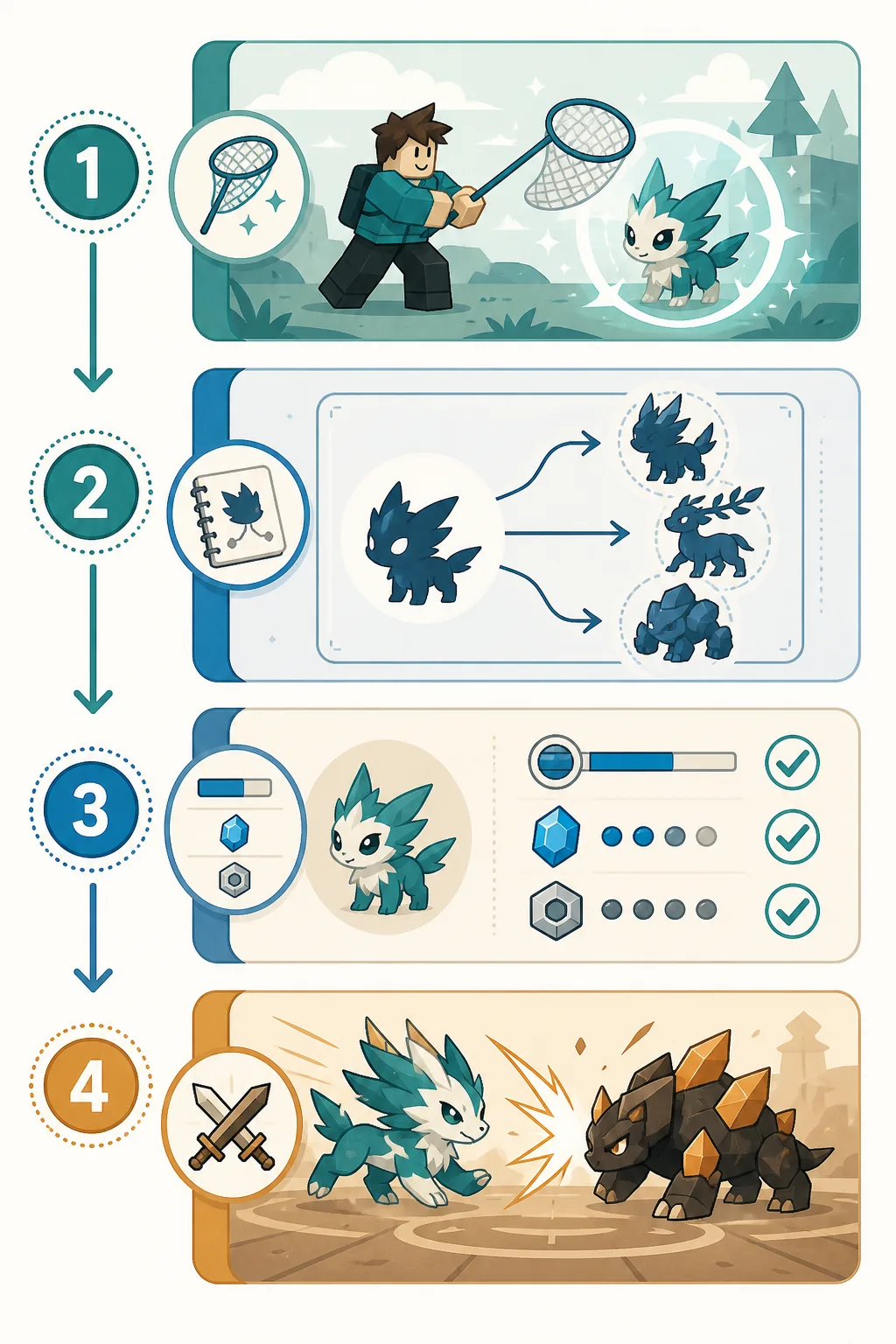
Use a four-step Evomon evolve check
This sequence works for starters, route catches, and creatures found through eggs. It keeps the guide useful even when the exact evolution table changes, because each step points to evidence you can inspect in the live experience.
Take a screenshot or write a short note for your own records if the route is important. Do not treat the note as official data; use it to compare what changed after an update.
- 1
Start with the creature you own
Open the current details or roster entry instead of starting from a generic list. Confirm the name, stage, type, level, and whether the creature is already carrying resources.
- Separate the creature's current role from its future form.
- Check whether the entry came from a starter, catch route, egg, or event.
- Use the Dex guide when the name or location is uncertain.
- 2
Inspect the evolve screen
Look for the visible target form, level gate, item requirement, confirmation button, and any warning about irreversible spending. If a field is hidden, leave it unknown.
- Do not infer an exact cost from a thumbnail or video title.
- Check whether the option is locked, unavailable, or ready.
- Notice whether the game offers more than one target or branch.
- 3
Verify level and materials
Compare the requirement with your inventory and the next route. Read the current item name carefully, then check the Evolution Stones guide for farming context rather than assuming a community drop table is permanent.
- Keep rare materials unspent until the role is clear.
- Check whether the same material can support another creature.
- Record the date when a requirement matters to your plan.
- 4
Test the new form
After evolving, use a low-cost route or ordinary battle to confirm damage, speed, survivability, and type coverage. A successful evolution should improve a real decision, not only a collection number.
- Keep one backup member while testing.
- Compare the result with the team problem you wrote down.
- Use the type chart and team-building guide when the result is a matchup issue.
Prefer the current in-game screen, then the official Roblox experience and current developer signals. Label community notes as community notes and update your own record after a patch.
Starter evolutions: use the right page for the right question
Starter evolution searches are popular because a first choice can shape the whole early route. The existing Starters guide already compares Bubble, Blazpup, and Leafbun, explains starter role trade-offs, and shows how to delay a costly decision until the next matchup is clear. This new page should not repeat that comparison or create a competing starter URL.
Use the starter page when you need a choice between the three opening paths. Use this page when you already have a starter and need a repeatable way to inspect its next form, compare the material cost, and test whether the evolution fixes a real weakness.
Compare the route
Ask whether the next form improves the type, speed, durability, or role your first island actually needs. A general ranking is weaker evidence than a route problem you can name.
Protect flexibility
Keep the starter useful while you scout another coverage option. Avoid spending every rare resource before you know whether the form is a long-term team member.
Verify the final form
Use the live evolve screen for the target name, level, and material. Then test the form before replacing the rest of the party around it.
Open the Evomon starters guide for the Bubble vs Blazpup vs Leafbun comparison; this page is the general evolution verification layer.
Evolution stones and materials: decide what the cost means
An evolution material has two values: the form it unlocks now and the options it prevents you from taking later. That is why a farming answer alone is not enough. Before you spend, compare the material source, how repeatable the route is, whether the creature has already proved its role, and whether a cheaper catch can solve the same problem.
The existing Evolution Stones guide covers farming routes, evolve-screen checks, and spending priorities. Link to it for the acquisition details. Keep this section focused on the decision layer that connects materials to the evolution route.
Common material now
Use a common resource when the form fixes an immediate route problem and the cost is easy to recover.
- The creature has a tested role.
- The next battle benefits from the form.
- The material is not blocking a stronger planned upgrade.
Rare material later
Wait when the resource is scarce, the target form is unverified, or your team has not yet shown that it needs the upgrade.
- The current member still passes the route.
- A future branch may have higher opportunity cost.
- You need more information from the live game.
Material mismatch
Stop when a list names an item that you cannot see in the current game. Treat the discrepancy as a source check, not as a reason to farm a random substitute.
- Reopen the evolve screen.
- Check the item spelling and icon.
- Record whether the report is old, regional, or community-sourced.
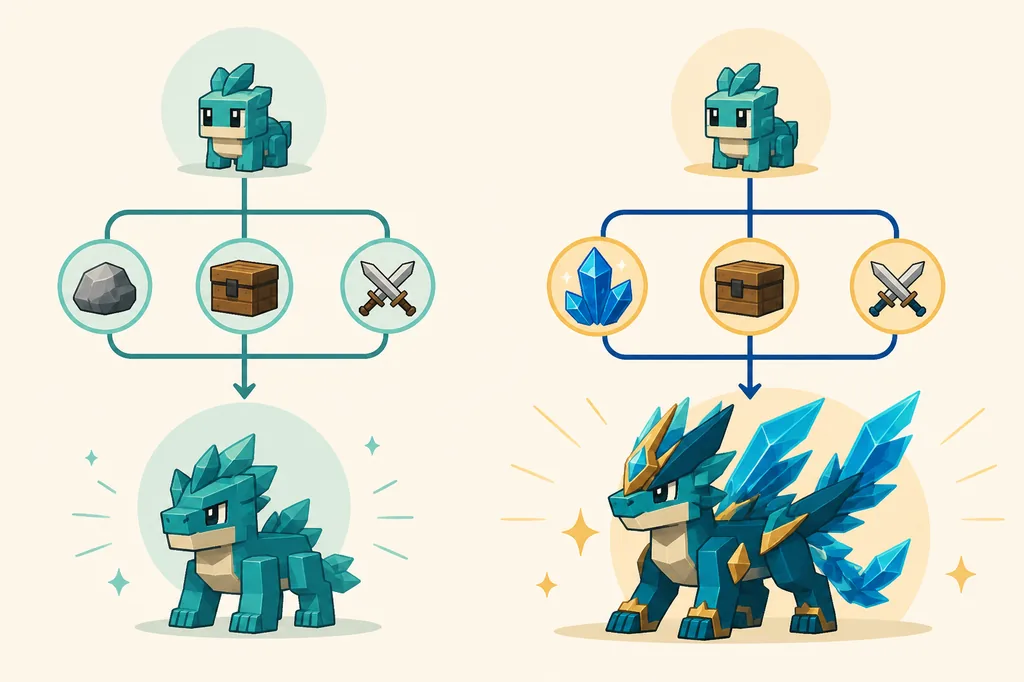
Should you evolve now or wait?
There is no universal timing rule. Use the smallest decision that makes the next battle, route, or collection goal clearer.
Evolve now when the role is proven
The creature already fills a job, the current screen confirms the cost, and the new form directly improves a matchup, survivability check, or progression gate.
Wait when the cost is scarce
Keep the material when the form is still based on an old list, the current member is performing well, or the same resource could solve a more urgent team gap.
Test before rebuilding
Do not replace six team slots because one evolution looks impressive. Change one variable, run a normal battle, and compare the result with your written problem.
Update your notes after patches
A new route, event, balance change, or item source can alter the best timing. Recheck the screen before repeating an old plan.
Common Evomon evolution mistakes
Treating a community list as official
A community list can help you find a question, but it cannot replace the current evolve screen. Keep the source label and check the value before publishing or spending.
Chasing the rarest-looking form
Visual rarity is not the same as team value. Compare type coverage, survivability, availability, and the route you are actually trying to clear.
Spending before checking the item
A stone, crystal, token, or event material may have a similar name but a different use. Read the current icon and quantity before confirming.
Copying starter advice into every creature
Starter paths are a special early decision. Do not use a starter comparison as a complete Dex evolution table or as proof that every creature follows the same route.
Ignoring the post-evolution test
An evolution should be measured in a real battle or route. If it does not solve the problem you named, keep the lesson and avoid more spending until the mismatch is understood.
Evomon evolutions FAQ
What are the Evomon evolutions?
Use the current creature details and evolve screen to confirm the target form, level, and material. Public lists can help you discover names to investigate, but this guide does not treat an old list as a permanent official database.
How do I evolve an Evomon?
Open the creature's current details, inspect the evolve option, confirm the visible level and material requirement, then test the result in a low-cost battle. If the screen does not show a value, keep it marked as unverified.
Do Evomon starters evolve?
Official Evomon media and the existing starter guide show multi-stage progression context, but the current level, target form, and cost should be checked in the live game. Use the Starters guide for the Bubble, Blazpup, and Leafbun comparison.
Where do I get evolution stones in Evomon?
Use the dedicated Evolution Stones guide for current farming routes and spending priorities. The route and reward details are patch-sensitive, so confirm the source and the live inventory before investing.
Should I evolve immediately or wait?
Evolve when the current screen confirms the cost and the form solves a real route or team problem. Wait when the material is rare, the form is based on an old report, or your current member is already doing its job.
Are all Evomon evolution requirements fixed?
Do not assume that they are. Live-service updates can change levels, items, branches, availability, or reward sources. The current in-game screen is the strongest check for the decision you are making today.
Is this an official Evomon evolution list?
No. Evomon.blog is an independent fan-made guide. It links to the official Roblox experience for live game access and labels community observations and AI-generated editorial visuals clearly.
Sources and verification notes
- Official Evomon Roblox experience — Use the live experience for current creature details, evolve screens, routes, and platform information. This guide does not present community guesses as official rules.
- Evomon Evolution Stones guide — Internal supporting guide for farming context and material-priority decisions.